Copyright @ Association of Arab Universities
01 October 2026
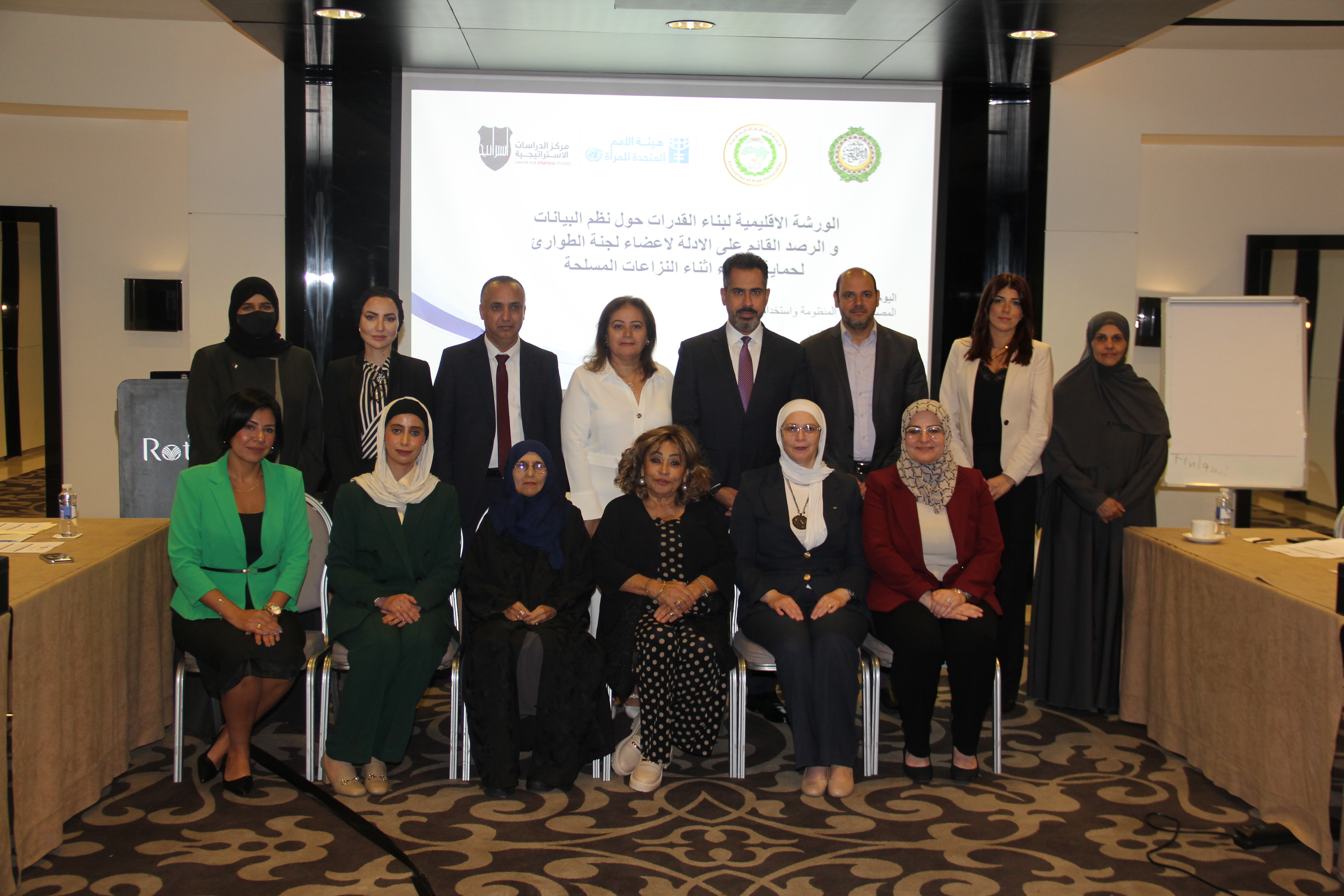
Association of Arab Universities (AArU) Co-Organizes Regional Workshop on Data Systems and Monitoring to Protect Women in Armed Conflicts
As part of its commitment to addressing regional priorities and leveraging academic and research expertise to support policymaking and decision-making, the Association of Arab Universities (AArU) co-organized a regional capacity-building workshop on “Data Systems and Evidence-Based Monitoring for Members of the Emergency Committee for the Protection of Women during Armed Conflicts.”
The workshop was organized in cooperation with the League of Arab States, represented by the Department of Women, and the UN Women Regional Office, with the participation of representatives from Arab countries and relevant institutions.
In his opening remarks, Prof. Anas Ratib Al-Soud, Executive Director of AArU, emphasized the importance of strengthening cooperation among academic, regional and international institutions to develop reliable, evidence-based data and monitoring systems that can support decision-makers and strengthen policies and interventions aimed at protecting women and girls affected by armed conflicts.
Dr. Doaa Khalifa, Minister Plenipotentiary and Director of the Department of Women at the League of Arab States, highlighted the importance of Arab coordination in strengthening mechanisms for data collection, monitoring and documentation, in support of evidence-based policies and the Women, Peace and Security Agenda.
For her part, Ms. Hiba Al-Zayan, Adviser on Women, Peace and Security and Humanitarian Affairs at UN Women, stressed the critical role of reliable and actionable data in identifying needs and priorities and enabling more effective institutional responses in emergencies and conflict settings.
The workshop formed part of the work of the Emergency Committee for the Protection of Women during Armed Conflicts and supported its 2025–2028 Action Plan, focusing on strengthening national capacities in integrated information systems, data collection and analysis, monitoring, and evidence-based decision-making.
The training sessions, delivered by Dr. Walid Al-Khatib and Dr. Tamara Zureikat from the Center for Strategic Studies at the University of Jordan, addressed data gaps, monitoring and documentation systems, national data frameworks, indicators, and the use of evidence to inform policies and responses.
Through its engagement in this initiative, AArU reaffirms its commitment to strengthening the role of Arab universities in addressing regional humanitarian and development priorities, connecting knowledge and research with public policy, and advancing evidence-based decision-making with tangible impact on communities.
Related Links:
Recent News
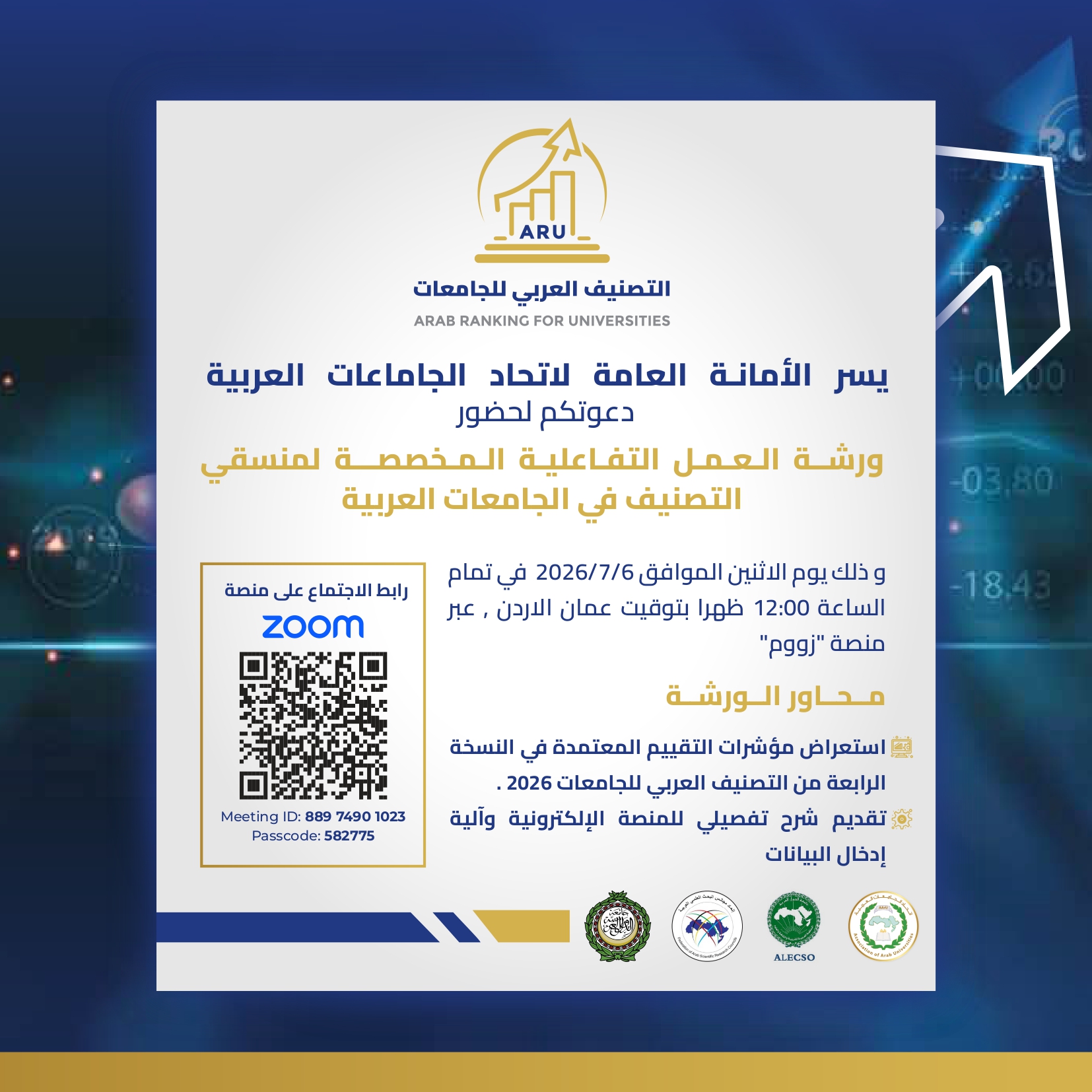
The General Secretariat of the Association of Arab Universities extends its warmest greetings. We are pleased to inform you that the Association of Arab Universities will hold a virtual workshop dedicated to university ranking coordinators at Arab universities.
06 July 2026
The Association of Arab Universities is pleased to invite university ranking coordinators to a virtual workshop.
06 July 2026

Towards a More Advanced Arab Ranking: Steering Committee Meeting Witnesses Launch of New Website and Updated Criteria
05 May 2025
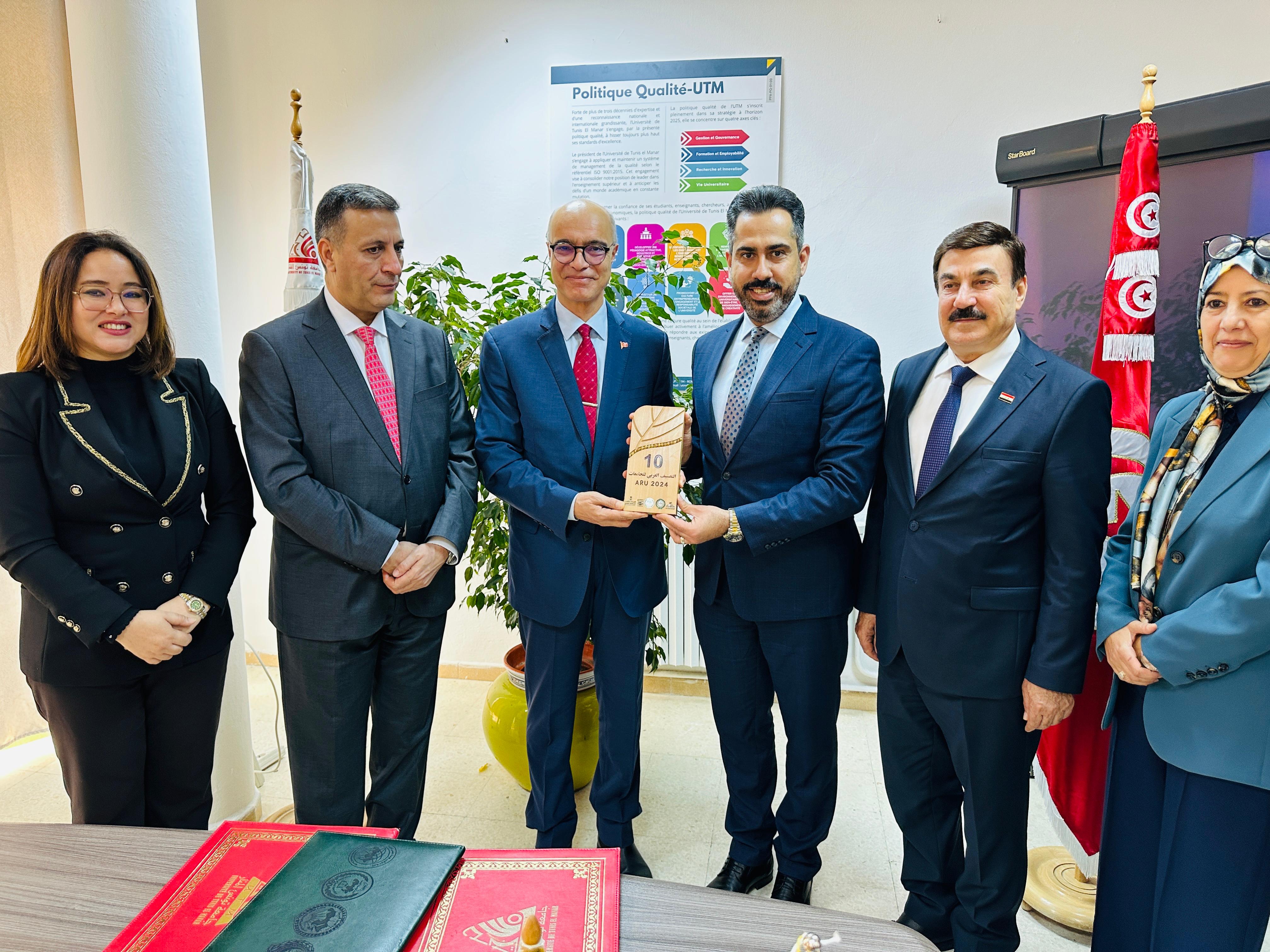
AArU Presents the Arab Ranking Shield to Tunis El Manar University
16 February 2025