Copyright @ Association of Arab Universities
02 July 2026
The Association of Arab Universities participates in the First Meeting of Regional University Associations under the auspices of UNESCO and IAU
2 July 2026
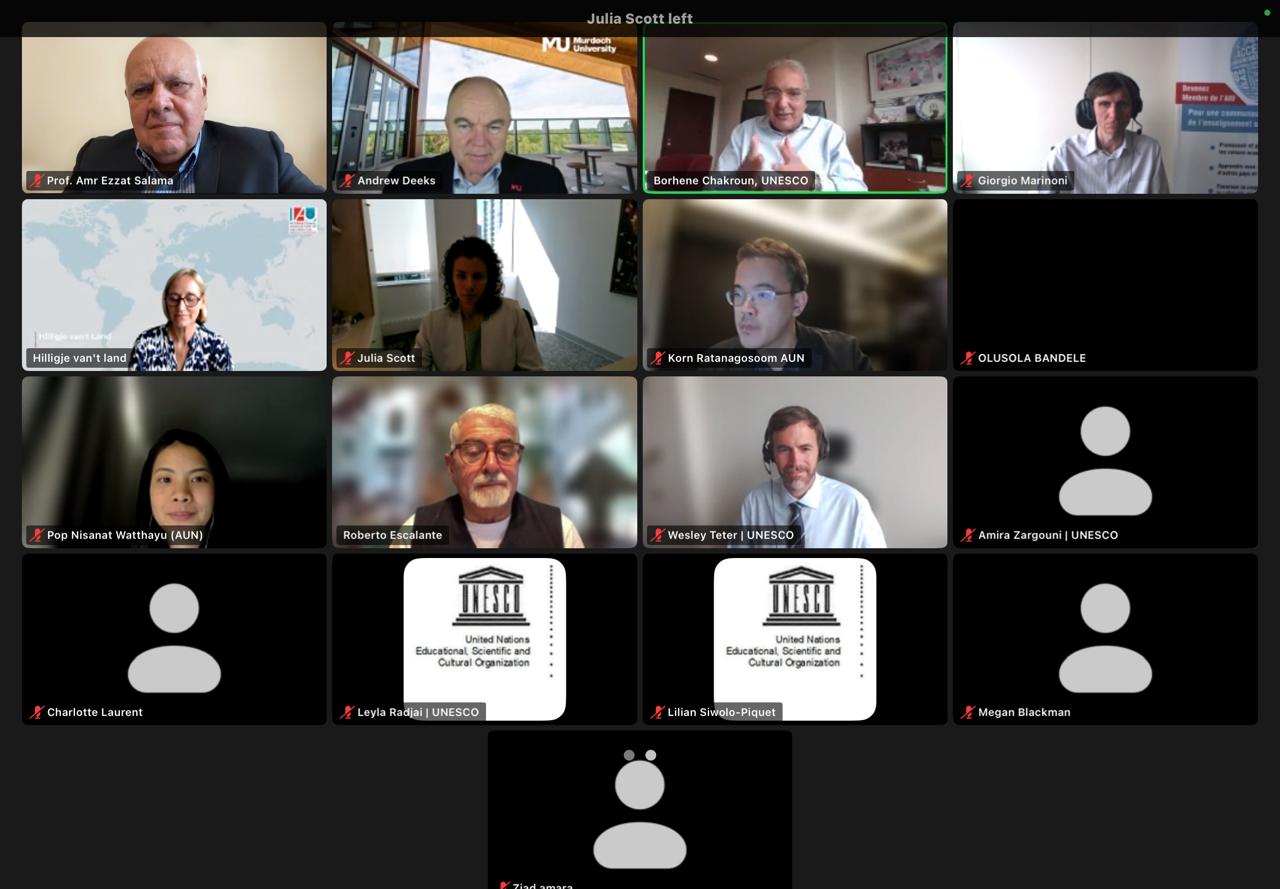
The Association of Arab Universities (AARU) participated in the first meeting of regional university associations, convened by the United Nations Educational, Scientific and Cultural Organization (UNESCO) in collaboration with the International Association of Universities (International Association of Universities), bringing together regional university associations from around the world in a high-level virtual dialogue on the future of higher education.
The meeting focused on strengthening global cooperation in higher education, advancing the implementation of the Global Convention on the Recognition of Qualifications concerning Higher Education, and contributing to the post-2030 global development agenda.
Representatives from Africa, the Arab States, Asia and the Pacific, ASEAN, Europe, Latin America and the Caribbean, and Canada, alongside UNESCO and IAU leadership, highlighted the importance of structured global-regional collaboration in shaping higher education policy.
During the Arab States roundtable, H.E. Prof. Amr Ezzat Salama, Secretary-General of AARU, presented the Arab regional perspective, emphasizing the need to strengthen strategic partnerships between UNESCO, IAU, and regional university associations to ensure effective translation of global frameworks into regionally relevant action.
He stressed three key priorities:
• Accelerating implementation of the Global Convention on the Recognition of Qualifications
• Strengthening national and regional qualifications frameworks to enhance academic recognition and mobility
• Enabling universities to respond to AI and digital transformation through ethical frameworks, quality assurance, and capacity building
• Accelerating implementation of the Global Convention on the Recognition of Qualifications
• Strengthening national and regional qualifications frameworks to enhance academic recognition and mobility
• Enabling universities to respond to AI and digital transformation through ethical frameworks, quality assurance, and capacity building
He also underscored the importance of supporting higher education institutions in conflict-affected regions to ensure continuity of learning and safeguard academic communities.
Looking ahead, he highlighted that the post-2030 agenda should firmly position higher education as a core driver of sustainable development, through knowledge creation, innovation, and human capital development.
On cooperation mechanisms, he proposed establishing a permanent consultative platform between UNESCO, IAU, and regional university associations, supported by thematic working groups on academic recognition, AI, digital transformation, sustainability, research collaboration, and future skills.
He concluded by calling for regional university associations to be recognized as institutional partners in global higher education governance, advocating for a collaborative model that integrates global vision, regional ownership, and local implementation.
Related Links:
Recent News
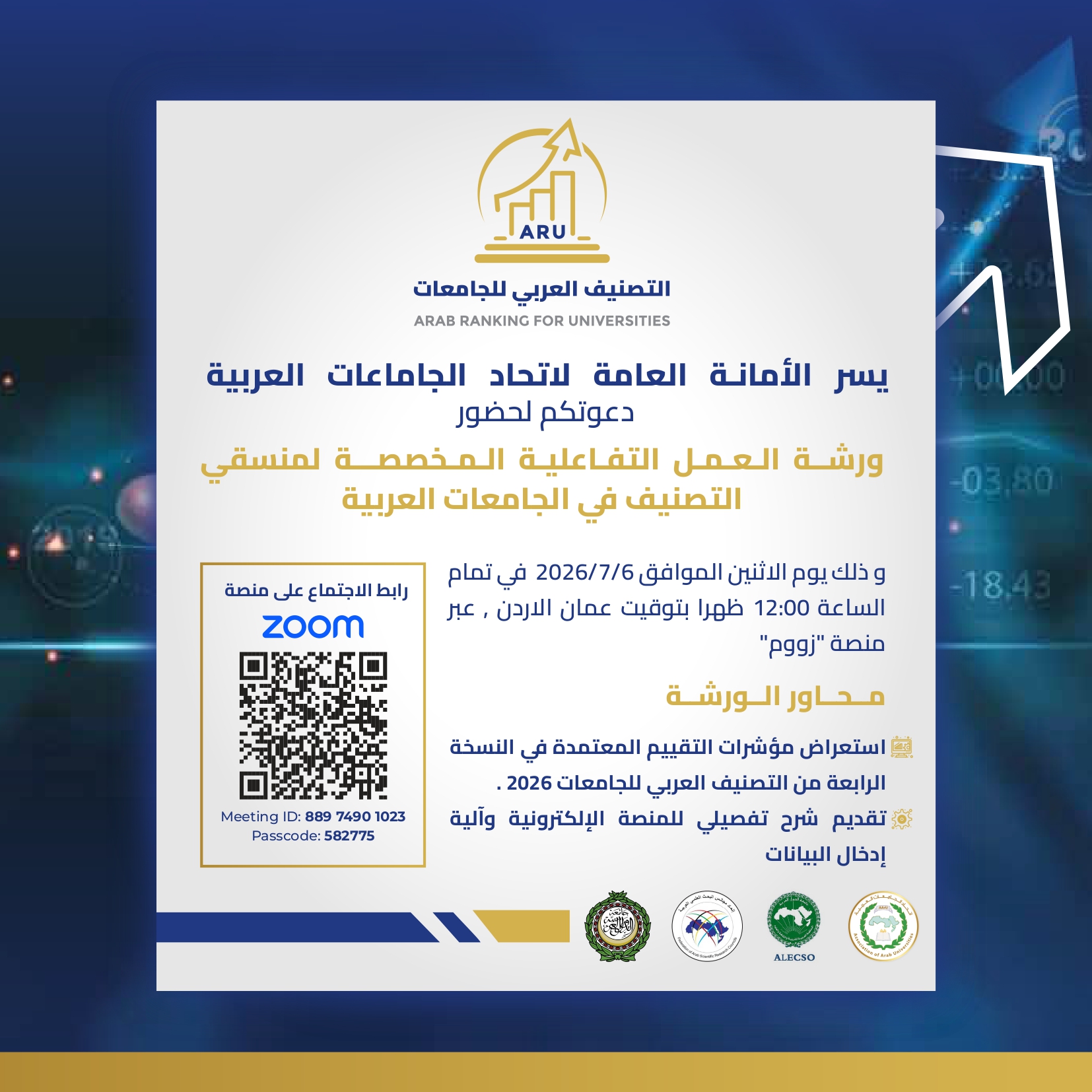
The General Secretariat of the Association of Arab Universities extends its warmest greetings. We are pleased to inform you that the Association of Arab Universities will hold a virtual workshop dedicated to university ranking coordinators at Arab universities.
06 July 2026
The Association of Arab Universities is pleased to invite university ranking coordinators to a virtual workshop.
06 July 2026

Towards a More Advanced Arab Ranking: Steering Committee Meeting Witnesses Launch of New Website and Updated Criteria
05 May 2025
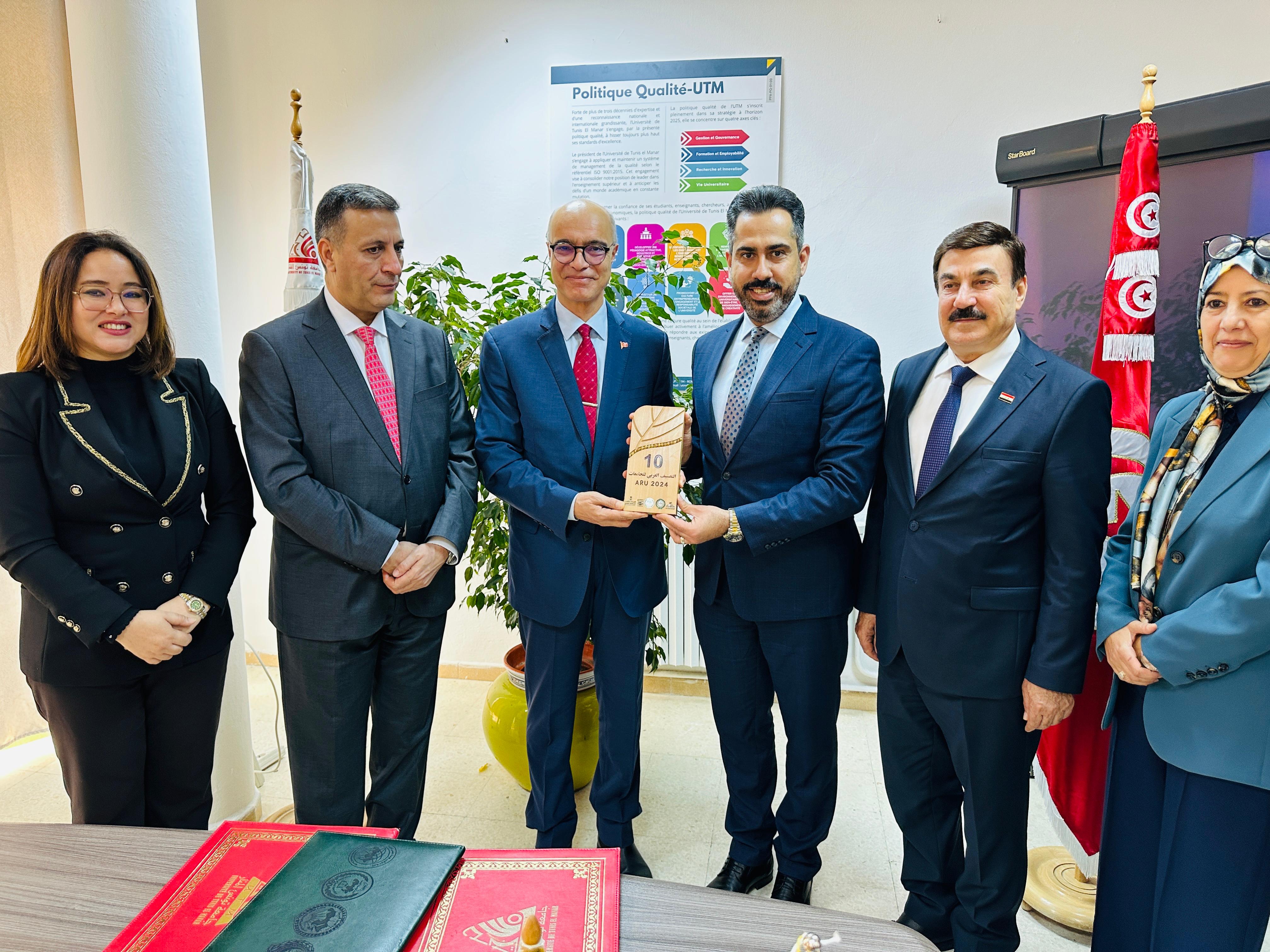
AArU Presents the Arab Ranking Shield to Tunis El Manar University
16 February 2025